
Interest rates rarely stay quiet for long.
When they move, even slightly, the ripple effects tend to reach every corner of the housing market. Buyers feel it first. Then investors. Eventually landlords begin noticing changes as well. Sometimes slowly, sometimes all at once.
For Denver landlords, the conversation around interest rates has become more practical than theoretical. Financing costs change. Property values shift. Tenant demand moves in subtle ways that are easy to overlook at first.
None of this means rental property suddenly becomes a bad investment. Not at all. In many cases the opposite happens. But it does mean that strategies which worked five years ago may need some adjustment.
Understanding how rising interest rates affect Denver landlords is less about predicting the market and more about responding thoughtfully to the changes already happening.
Interest Rates Change the Cost of Ownership
The most obvious effect of rising interest rates is simple math.
Mortgage payments increase.
A property purchased with a 3 percent interest rate behaves very differently from one financed at 6 or 7 percent. Monthly carrying costs rise. Refinancing becomes less attractive. New acquisitions require closer financial analysis.
For landlords who bought properties years ago, this shift may feel distant. Existing loans remain stable. But owners purchasing new rental properties or refinancing existing ones are encountering a different financial environment.
This is where rising interest rates and rental property profitability become closely connected.
Higher financing costs compress profit margins. Landlords may need to adjust rent expectations, operating budgets, or investment timelines to maintain stable returns.
It is not necessarily a negative development. It simply requires clearer financial planning.
Rental Demand Often Increases When Buying Becomes Harder
Interestingly, higher interest rates tend to strengthen rental demand.
When mortgage rates rise, many potential homebuyers pause their plans. Monthly payments become less affordable. Loan approvals tighten. Down payment requirements feel heavier.
Those households still need somewhere to live.
Often that means remaining renters longer than originally planned.
In cities like Denver, where population growth continues steadily, this dynamic can increase demand for well managed rental housing. Owners may see stronger application activity or longer tenant retention periods.
Some investors watch this pattern closely because it influences Denver rental market trends during high interest rates. When buying slows down, renting often becomes the default option.
This does not guarantee higher rents immediately, but it tends to stabilize occupancy.
Operating Costs Continue Rising Too
Interest rates rarely move alone.
They often arrive alongside broader economic shifts. Insurance premiums increase. Property taxes adjust. Maintenance costs rise as labor and materials become more expensive.
Many landlords discover that rising financing costs are only one part of the equation.
Ownership expenses accumulate quietly. Insurance renewals climb. Repair invoices increase. Utility costs shift unpredictably.
For some owners, these realities reveal expenses they had not fully accounted for earlier. It becomes easier to understand the hidden operating expenses many landlords encounter with rental property ownership, especially as economic conditions evolve.
Understanding the full cost structure of a rental property helps owners make better long term decisions rather than reacting to short term changes.
Property Values May Stabilize or Slow
Higher interest rates tend to cool real estate price growth.
This does not necessarily mean property values fall dramatically. In many markets they simply grow more slowly. Buyers become cautious. Financing approvals take longer. Negotiations increase.
For landlords, this environment can feel unfamiliar after years of rapid price appreciation.
But stabilization has advantages.
Investors can evaluate opportunities more carefully. Competition may decrease slightly. Rental demand remains steady while property speculation slows.
These shifts are often discussed within broader Denver real estate market trends that owners are watching closely, especially as the city continues evolving economically and demographically.
Markets rarely move in straight lines forever. Periods of adjustment tend to create new opportunities for patient investors. Denver isn’t alone in this — San Diego rents have softened under similar pressure, and owners there are weighing the same tradeoffs between holding, repositioning, and reinvesting.
Financial Planning Becomes More Important Than Ever
When interest rates rise, guesswork becomes expensive.
Landlords benefit from clearer financial forecasting. Cash flow projections matter more. Maintenance reserves become essential. Vacancy assumptions should be realistic rather than optimistic.
This is particularly true for newer investors who may have entered the rental market during years of low interest rates.
Learning the fundamentals of long term financial planning strategies that help landlords manage rental property income can make a significant difference in how owners navigate changing economic conditions.
Simple practices such as maintaining emergency repair reserves, reviewing operating expenses annually, and adjusting rent gradually can protect investment stability over time.
Property managers often encourage these habits because they reduce stress during unpredictable market cycles.
Insurance and Risk Planning Matter More in Changing Markets
Another factor landlords sometimes overlook is risk protection.
Insurance policies should evolve alongside market conditions. Rising property values, construction costs, and legal liabilities can affect coverage needs.
Landlords who purchased policies years ago may discover that replacement costs or liability coverage levels no longer match current property values.
Reviewing the types of insurance coverage landlords should consider for rental properties helps ensure investments remain protected even as financial conditions change.
It is a small step that prevents larger problems later.
Property Management Can Provide Stability
Market shifts tend to highlight operational weaknesses.
Self-managing landlords sometimes discover that managing tenants, maintenance schedules, financial planning, and regulatory compliance becomes more demanding during economic changes.
This is where professional property management can provide structure.
Property managers monitor rental pricing trends, coordinate maintenance efficiently, and maintain consistent tenant communication. They also help owners adapt to changing market conditions without reacting impulsively.
For landlords balancing multiple properties or other careers, this kind of operational support often becomes increasingly valuable as financial conditions evolve.
Practical Strategies for Denver Landlords Right Now
Interest rates may remain elevated for some time. Or they may adjust again in the coming years. Predicting exact timelines is difficult.
What landlords can control is how they respond.
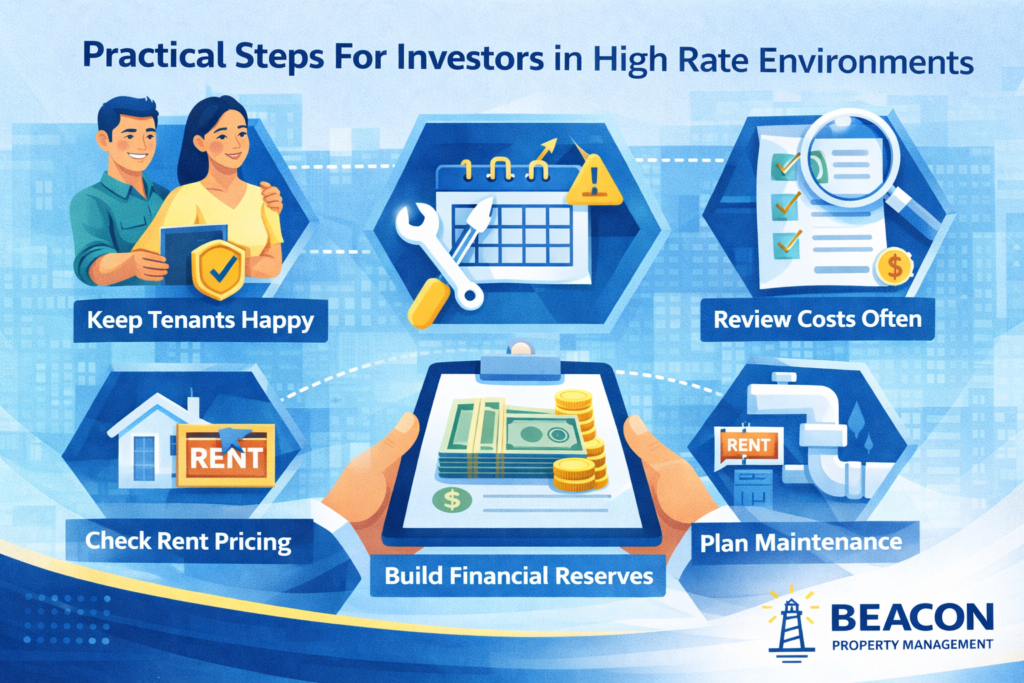
Several practical steps tend to help investors navigate higher-rate environments:
- Focus on tenant retention. Stable tenants reduce turnover costs and vacancy risk.
- Review operating expenses regularly. Small inefficiencies become noticeable when margins tighten.
- Plan maintenance proactively. Preventative repairs cost far less than emergency fixes.
- Evaluate rent pricing carefully. Competitive pricing helps maintain consistent occupancy.
- Strengthen financial reserves. Economic flexibility reduces stress during market fluctuations.
None of these strategies requires dramatic changes. They simply reflect disciplined property management practices.
A Long-Term Perspective Still Matters
Interest rates move in cycles.
Some years they rise. Other years they fall. Real estate markets respond accordingly, sometimes gradually and sometimes quite quickly.
For Denver landlords, the long term fundamentals remain relatively strong. Population growth continues. Job markets expand. Housing demand remains consistent across many neighborhoods.
Owners who approach these changes thoughtfully often discover that stability, not speed, drives long term investment success.
For landlords who want additional guidance navigating shifting market conditions, working with experienced professionals can provide helpful clarity.
At Beacon Property Management, we work with Denver property owners to monitor market trends, manage tenant relationships, and protect rental income through thoughtful long term strategies.
Sometimes the most valuable step a landlord can take is simply having the right support while the market adjusts.
FAQ
How do rising interest rates affect landlords?
A: Higher interest rates increase mortgage costs for new property purchases or refinancing, which can reduce profit margins.
Do rising interest rates increase rental demand?
A: Often yes. When buying homes becomes less affordable, more people continue renting, increasing rental demand.
Should landlords raise rent when interest rates rise?
A: Not automatically. Rent adjustments should reflect local market conditions, tenant demand, and competitive pricing.
How can landlords protect profits during high interest rate periods?
A: Maintaining strong financial planning, controlling operating costs, and prioritizing tenant retention helps stabilize rental income.
Can property managers help landlords adapt to market changes?
A: Yes. Property managers track local rental trends, manage tenants efficiently, and help owners adjust strategies during economic shifts.