
Owning rental property tends to create a certain mindset. Fix problems when they appear. Handle repairs as they come. Deal with issues one by one.
It sounds reasonable. Many owners operate this way for years.
But maintenance rarely behaves that politely.
A small roof issue becomes a ceiling stain. A minor plumbing drip quietly damages cabinetry. Gutters clog and suddenly water runs down exterior walls during a Denver snowmelt.
The surprising part is not that repairs happen. Properties age. Systems wear out.
The expensive part is how often those repairs could have been avoided entirely.
Preventative maintenance is less about perfection and more about timing. Addressing issues early, before they become emergencies, tends to protect both the property and the owner’s budget. Over time, this approach can save Denver landlords significant money while also keeping tenants happier and more likely to stay.
And as it turns out, those two things are more connected than most owners initially assume.
Why Preventative Maintenance Matters More in Denver
Denver’s climate has a personality. Four distinct seasons. Sudden temperature swings. Snowstorms followed by bright sun and rapid melting.
All of that affects rental properties in subtle ways.
Roof shingles expand and contract. Pipes face freezing risks. Landscaping changes dramatically between seasons. Even foundations shift slightly over time due to soil movement and moisture.
Ignoring these small seasonal stresses often leads to larger repair bills later.
This is why many experienced owners adopt a structured preventative maintenance plan for Denver rental properties rather than waiting for issues to appear.
The concept is simple.
Inspect systems regularly. Fix small problems early. Replace aging components before they fail.
It may feel like extra work upfront. In practice, it tends to reduce both costs and headaches over time.
Property managers often build these inspection routines into their service schedules because they know how easily minor issues turn into expensive emergencies.
Roof and Gutter Inspections Prevent Major Structural Costs
Roof problems rarely start dramatically.
A loose shingle here. A small crack in flashing. Debris building up in gutters after a storm.
Left alone, those issues can allow water to enter places it should not.
Once water begins penetrating roofing materials or attic spaces, repair costs increase quickly. Insulation gets wet. Wood framing can begin to rot. Interior ceilings stain or collapse.
Routine roof inspections, particularly after heavy snow or wind events, can prevent this chain reaction entirely.
Gutter cleaning plays an equally important role. When gutters overflow, water runs along siding and foundations instead of away from the building.
Many owners already follow some version of a seasonal maintenance schedule for Denver property owners, even if they do not think of it that way. Fall gutter cleaning. Spring roof checks. Basic exterior inspections.
Consistency matters more than complexity.
Plumbing Checks Catch Expensive Problems Early
Plumbing failures rarely announce themselves loudly.
They tend to whisper first.
A slow drip under a sink. A slightly damp cabinet base. A toilet that runs longer than it should.
Those small signs are easy to overlook, especially when tenants are busy and landlords live elsewhere.
But plumbing leaks are one of the most common sources of long term property damage. Water quietly spreads through flooring and drywall before anyone notices.
Regular plumbing inspections help identify these early signals.
Checking supply lines, water heaters, and under sink fittings a few times each year can dramatically reduce the likelihood of sudden flooding or pipe bursts.
Many owners who follow long term maintenance strategies for rental properties eventually realize that plumbing checks alone can prevent thousands of dollars in damage.
Landscaping Maintenance Is More Important Than It Seems
Landscaping often feels cosmetic.
Trim the lawn. Keep the yard presentable. Maybe replace a few plants each season.
But landscaping also protects the property itself.
Poor drainage around foundations can create structural stress. Tree roots can damage plumbing lines. Overgrown vegetation traps moisture against siding.
Denver’s dry climate combined with winter freezes creates unique landscaping challenges. Hard surfaces shift slightly. Soil compacts. Water runoff changes patterns.
Many landlords adopt low maintenance options, such as stone or drought tolerant landscaping. Techniques discussed in practical landscaping approaches like decorative rock solutions for rental properties often reduce long term maintenance costs while improving drainage and durability.
The result is fewer foundation concerns and lower landscaping expenses over time.
HVAC Maintenance Prevents Mid-Winter Emergencies
Heating systems tend to fail at the worst possible time.
Usually during the coldest week of the year.
Regular HVAC inspections help prevent that situation entirely. Filters need replacement. Duct systems should be checked periodically. Older components wear out slowly before finally stopping altogether.
Preventative servicing extends the life of heating systems and reduces energy consumption.
Tenants also notice the difference.
Consistent heating performance creates a more comfortable living environment. When residents feel their home is well maintained, they tend to stay longer and take better care of the property.
This is one reason property managers often schedule HVAC maintenance proactively instead of waiting for tenant complaints.
Exterior Inspections Protect the Entire Structure
Exterior damage tends to develop slowly.
Cracks in siding. Minor foundation shifts. Caulking around windows that begins to fail.
These problems might seem harmless at first. Over time they allow moisture intrusion, which leads to mold, wood rot, and insulation damage.
Routine exterior inspections identify these vulnerabilities before they spread.
A landlord who spends an hour walking around the property twice a year often catches issues that would otherwise turn into major repair projects.
That small habit becomes a key part of preventative maintenance for Denver rental homes, even if it feels informal.
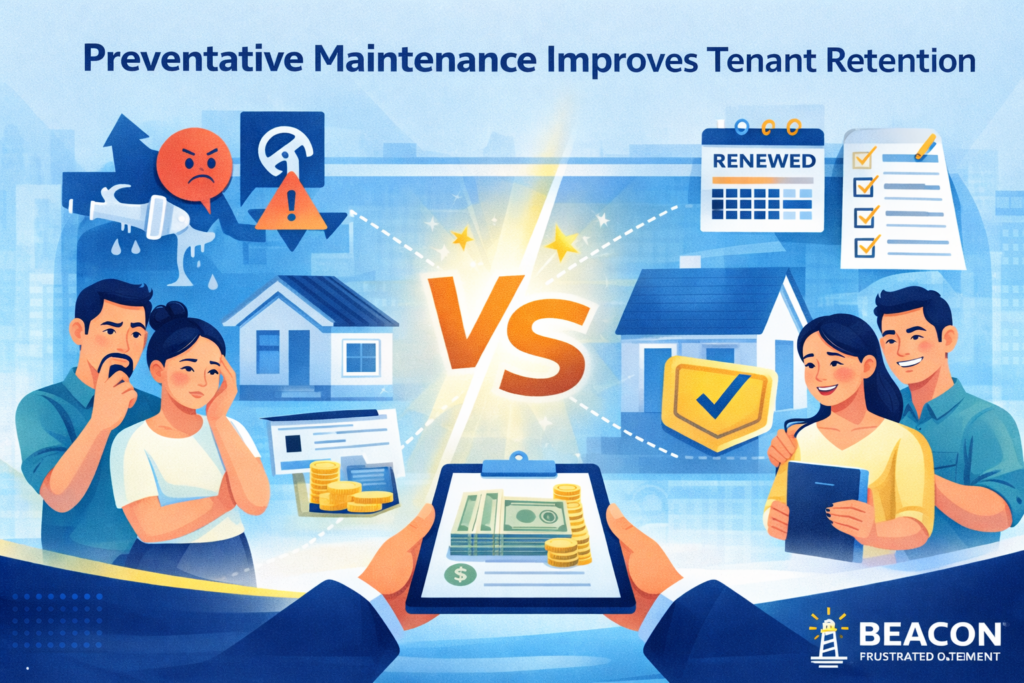
Preventative Maintenance Improves Tenant Retention
Maintenance affects more than the physical property.
It shapes the tenant experience.
Renters pay attention to how quickly repairs are handled and whether problems seem preventable. When maintenance requests pile up or emergencies occur frequently, tenants start evaluating other housing options.
On the other hand, consistent upkeep signals professionalism.
Tenants feel more confident renewing leases when they believe the property is being cared for properly.
The difference may seem subtle, but over time preventative maintenance supports stronger tenant retention and fewer vacancy periods.
Property managers often emphasize this point. Maintenance planning is not just about protecting buildings. It also protects rental income.
Emergency Repairs Cost More Than Preventative Work
One of the most frustrating realities for landlords is how expensive emergency repairs become.
A small plumbing leak addressed early might cost a few hundred dollars.
The same leak discovered weeks later could require cabinet replacement, drywall repair, mold remediation, and flooring replacement.
The same pattern appears with roofs, HVAC systems, appliances, and landscaping drainage issues.
Emergency repairs also require faster scheduling. Contractors charge higher rates for urgent service calls, particularly during busy seasons.
Preventative maintenance spreads those costs out in predictable ways.
Instead of sudden four digit repair bills, landlords deal with smaller routine maintenance expenses.
Over the life of a rental property, the difference becomes substantial.
Why Many Owners Work With Property Managers
Preventative maintenance requires consistency.
That part can be difficult for landlords who own multiple properties or live far from their rentals.
Property managers often build structured inspection schedules that ensure maintenance tasks happen on time.
They coordinate contractors, track repair histories, and respond quickly when small issues appear.
This system helps landlords maintain properties proactively rather than reactively.
Many owners discover that professional oversight reduces long term repair costs while also simplifying day to day management.
It becomes less about putting out fires and more about preventing them.
A Smarter Approach to Protecting Your Investment
Preventative maintenance rarely feels urgent. That may be why it is sometimes ignored.
But the long term math tends to favor proactive owners.
Small inspections. Routine servicing. Minor repairs completed early.
These habits protect property value, reduce emergency costs, and create a more stable rental experience for tenants.
For landlords in Denver’s evolving housing market, that stability matters more each year.
And for those who prefer not to manage these systems alone, it may be worth exploring professional support.
At Beacon Property Management, we help property owners stay ahead of maintenance issues through structured inspections, reliable vendor networks, and proactive property oversight.
If maintaining your rental property feels like a constant cycle of repairs, it might simply mean the system needs to change.
Sometimes preventing problems is the most valuable service a property manager can provide.
FAQ
1. Why is preventative maintenance important for rental properties?
A: Preventative maintenance helps identify small issues before they become expensive repairs, protecting both property value and rental income.
2. How often should landlords inspect their rental property?
A: Most experts recommend at least two inspections per year, with additional checks after major seasonal weather changes.
3. What systems should landlords maintain regularly?
A: Roofing, plumbing, HVAC systems, gutters, landscaping drainage, and exterior structures should all be inspected regularly.
4. Can preventative maintenance improve tenant retention?
A: Yes. Tenants are more likely to stay in properties that are well maintained and where repairs are handled quickly.
5. Do property managers handle preventative maintenance?
A: Many property managers create structured maintenance schedules, coordinate repairs, and perform regular inspections to prevent costly problems.