
Rental markets change slowly. Then suddenly they do not.
Over the past few years, Denver has seen a mix of population growth, shifting work patterns, and rising housing costs that quietly reshaped renter expectations. Many landlords still rely on assumptions that worked ten years ago. A clean unit, a fair price, and a signed lease used to be enough.
It still matters. Of course it does. But tenants in 2026 tend to evaluate the whole experience now, not just the apartment itself.
That includes responsiveness, transparency, maintenance reliability, and a sense that the property is professionally managed rather than improvised. It sounds simple when written down, yet it plays out in small decisions every day.
Understanding what Denver tenants expect from landlords is less about chasing trends and more about recognizing what renters quietly notice when deciding whether to stay or start browsing listings again.
Let’s walk through what actually seems to matter.
Clear and Consistent Communication
Communication probably deserves the first spot, even if it feels obvious.
Tenants tend to remember how quickly someone responded when something went wrong. A maintenance request, a billing question, a small concern about noise. The issue itself is rarely the defining factor. The response time often is.
In many Denver rentals, expectations have shifted toward faster feedback. Not instant replies every hour of the day, but at least a predictable timeline. Tenants want to know someone saw the message. Silence tends to create frustration faster than a delayed repair.
This is one reason communication shows up repeatedly when discussing the role of communication in tenant satisfaction. A landlord may believe they are being responsive. Tenants judge it differently if a message sits unanswered for days.
Professional property managers often help here because communication systems are structured. Requests are logged. Responses are tracked. It removes some of the guesswork.
And tenants notice that consistency.
Reliable Maintenance That Does Not Feel Reactive
Maintenance is rarely the reason tenants choose a property in the first place. But it often becomes the reason they leave.
Denver renters tend to pay close attention to how repairs are handled. Quick temporary fixes that resurface months later can quietly damage trust. A property that shows signs of regular upkeep tends to create the opposite effect.
This is one area where landlord intentions sometimes differ from tenant perception. Owners may believe they are maintaining the property well. Tenants experience it through small signals. Hallway lights replaced quickly. Seasonal maintenance completed before the first snow. Appliances repaired rather than patched together.
The idea shows up repeatedly when discussing the psychology of happy tenants and small changes that make a big impact. Reliability builds a sense of stability even when the property itself is fairly modest.
Maintenance does not need to feel luxurious. It just needs to feel dependable.
Fairness and Transparency Around Policies
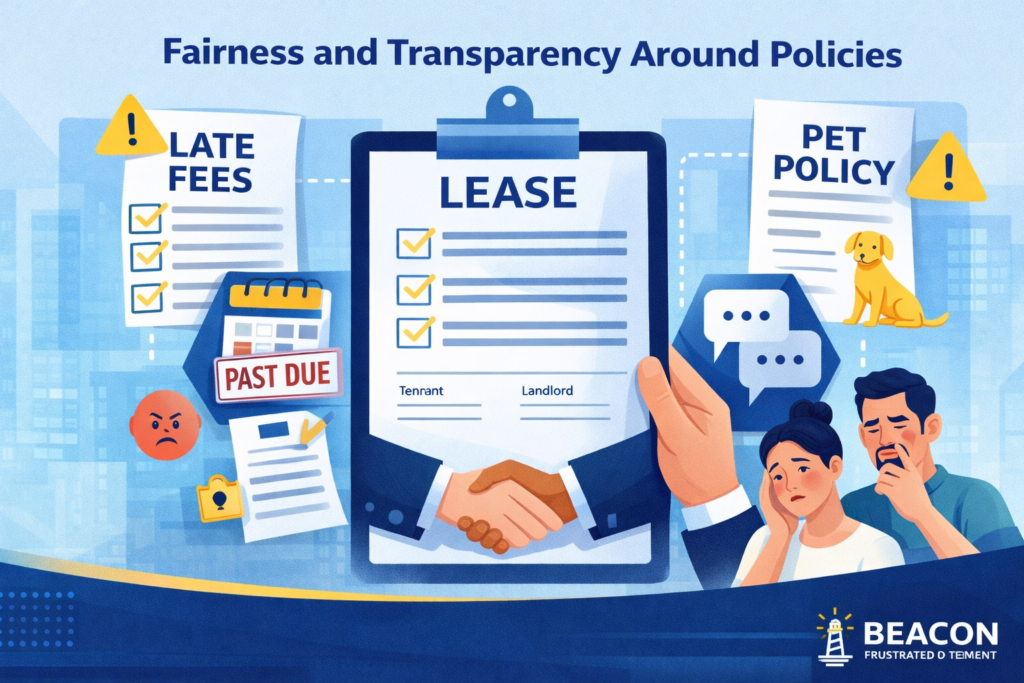
Tenants do not expect perfection. Most renters understand that policies exist for a reason. But they do pay attention to whether those policies feel reasonable and consistently applied.
Late fees, pet policies, lease terms, and maintenance responsibilities can create tension if expectations are unclear. When rules shift depending on the situation, tenants tend to lose confidence quickly.
Transparency matters here. Clear lease terms. Written guidelines. Communication before enforcement.
This also helps avoid the misunderstandings that often appear in situations like late rent or disputes between neighbors. Landlords who have structured processes tend to navigate those situations more smoothly.
Some owners rely on property managers specifically for this reason. They bring neutral procedures that reduce emotional decision making.
A Living Space That Feels Thoughtfully Maintained
Tenants notice the little things more than many owners realize.
A freshly painted wall. A well maintained yard. Clean walkways in winter. Working lighting in shared spaces. None of these upgrades dramatically increase rent, yet they affect how the property is perceived.
Many Denver renters view these signals as indicators of how the property will be managed long term. A neglected exterior sometimes suggests deeper issues inside.
This is part of a larger conversation about what makes Denver tenants happy in rental housing. It rarely revolves around luxury upgrades. Instead it revolves around the feeling that someone cares about the property.
Even small details communicate that message.
Stability and Predictability
Moving is disruptive. Packing boxes, changing addresses, finding new routines. Most tenants would prefer to avoid doing it repeatedly.
Because of that, renters increasingly value landlords who create stable environments. Clear lease renewal terms. Predictable rent adjustments. Advance notice of changes.
Some landlords unintentionally create turnover by treating leases as temporary arrangements rather than long term relationships. Tenants sense that uncertainty.
When renewals are handled thoughtfully, retention improves. This becomes especially important in competitive markets where reliable tenants are worth keeping.
Discussions around lease renewals and negotiating better terms without losing good tenants often highlight this balance. Rent adjustments are sometimes necessary. The way they are communicated tends to determine how tenants respond.
Reasonable Flexibility When Situations Change
Life is rarely predictable. Tenants lose jobs, relocate unexpectedly, or face financial hiccups that disrupt otherwise stable rental histories.
Denver landlords who approach these moments with structured flexibility often see stronger long term relationships. Flexibility does not mean ignoring lease terms. It usually means having clear processes for handling temporary issues.
For example, communication during payment delays can prevent minor problems from escalating into serious disputes. Landlords who document agreements and respond calmly tend to resolve these situations more effectively.
Professional property managers sometimes help maintain this balance. They enforce policies consistently while still offering practical solutions when circumstances shift.
That consistency can protect both sides.
A Sense That the Property Is Professionally Managed
Perhaps the most subtle expectation tenants have in 2026 is professionalism.
Not necessarily luxury finishes or elaborate amenities. Just organization. Clear systems. Communication that feels intentional rather than improvised.
Tenants notice when maintenance requests disappear into a text message thread. They notice when policies change without explanation. They also notice when those problems do not occur.
Many landlords handle management themselves and do it well. Others eventually realize the workload grows faster than expected. Leasing coordination, repairs, compliance questions, communication with tenants. It accumulates.
Property managers often step in when owners want that structure in place without managing every detail personally. For tenants, the result simply feels smoother.
And that tends to influence whether they renew the lease or start searching again.
What All of This Means for Denver Landlords
Tenant expectations are not radically different in 2026. The difference lies in how clearly those expectations are felt.
Renters look for reliability, transparency, and responsiveness. They want a home that feels managed with intention rather than reaction. Many landlords already provide that environment without realizing how valuable it is.
The challenge often lies in maintaining those standards consistently as portfolios grow or schedules become busier.
For owners who find themselves juggling maintenance calls, lease questions, and tenant concerns at the same time, professional support can make the process more sustainable.
At Beacon Property Management, we work with landlords who want to create rental experiences that tenants actually want to stay in. If you are evaluating how your property performs from the tenant perspective, we are always open to having that conversation together.
FAQs
What do Denver tenants value most in a rental property?
A: Most renters prioritize responsive communication, reliable maintenance, and clear lease terms over luxury upgrades.
How can landlords keep tenants happy in Denver rentals?
A: Consistent maintenance, clear communication, and predictable policies tend to improve tenant satisfaction and retention.
Do tenants expect fast responses from landlords?
A: Yes. Tenants generally expect timely replies to maintenance requests and questions, even if the issue cannot be solved immediately.
Why do tenants leave good rental units?
A: Many tenants leave due to poor communication, delayed maintenance, or unclear policies rather than problems with the property itself.
Should landlords hire property managers in Denver?
A: Some landlords choose professional property managers to maintain consistent communication, maintenance coordination, and lease management as their portfolios grow.