

At some point, nearly every landlord stares at an empty unit and asks the same question. Would this rent faster if it were furnished?
It feels like a reasonable thought. A couch here. A bed there. Maybe a small dining table so the place looks finished instead of echoey. Furnished rentals show well. They photograph nicely. They promise convenience.
But convenience has a price. And sometimes a long tail of consequences.
Before hauling furniture up the stairs, it’s worth slowing down and looking at what furnishing a rental actually changes, financially and operationally. Because the decision is less about taste and more about alignment with the type of tenant you want to keep.
What Furnishing a Rental Actually Signals to Tenants
Furnishings do more than fill space. They send a message.
A furnished unit often signals short-term flexibility. Move-in ready. Minimal commitment. Ideal for tenants who value speed over permanence. That includes traveling professionals, corporate renters, and people relocating temporarily.
An unfurnished unit signals something else. Stability. Personalization. A place someone intends to stay.
Neither signal is inherently better. But mismatching the signal to your market usually creates friction later. That friction shows up as higher turnover, more wear, and sometimes strained communication.
Which ties closely to why tenants leave good units, even when the property itself is objectively solid.
The Financial Upside Looks Good at First
Yes, furnished rentals often command higher rent. Sometimes significantly higher, depending on location and demand.
This is especially true in markets with strong relocation traffic or short-term professional housing needs. Denver, Boulder, and areas near hospitals or tech hubs often see this premium in action.
From an ROI perspective, the logic seems straightforward. Higher rent offsets furniture costs over time. Faster leasing reduces vacancy loss. Everyone wins.
Until maintenance enters the picture.
Furniture Changes the Expense Curve
Furniture does not depreciate politely.
Couches sag. Mattresses stain. Dining chairs loosen. And tenants rarely treat shared furniture with the same care they treat their own.
Replacement timelines shorten. Cleaning costs increase. Liability exposure expands, especially around beds, sofas, and storage pieces.
This is where the hidden costs of owning a rental property in Colorado become more visible. Furnished units tend to surface those costs earlier and more often.
Even minor damage becomes a management decision rather than a tenant decision. And those decisions add up.
Furnished Rentals Attract Different Turnover Patterns
Furnished rentals tend to turn more often. That’s not a flaw. It’s just a reality.
Shorter stays mean more marketing, more cleaning, more inspections, and more coordination. Some landlords thrive in that rhythm. Others burn out quickly.
If your goal is long-term stability and predictable cash flow, furnishing may work against you. If flexibility and premium pricing are priorities, it can support them.
This trade-off becomes especially relevant when thinking about lease renewals and negotiating better terms without losing good tenants. Furnished tenants are less likely to renew. Unfurnished tenants are more likely to settle in.
Management Complexity Increases Quietly
Furnished rentals require clearer documentation.
Inventory lists. Condition reports. Wear-and-tear distinctions. Expectations around cleaning and use. Without these, disputes escalate quickly.
Communication becomes more important, not less. When tenants share responsibility for furniture, clarity prevents resentment.
This is where the role of communication in tenant satisfaction becomes very real. Fast responses and written guidelines often make the difference between smooth turnover and drawn-out conflict.
Property managers experienced with furnished rentals tend to systematize these details early. Without that structure, small issues tend to pile up.
Furnished vs Unfurnished ROI Depends on Market Fit
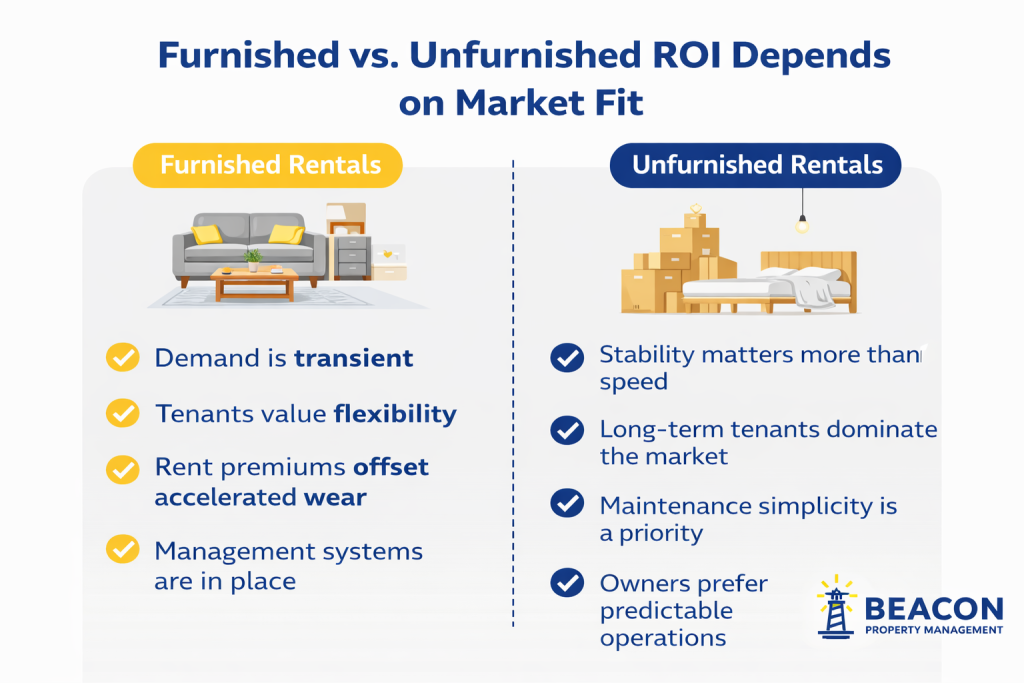
There is no universal ROI answer. Only contextual ones.
Furnished rentals often outperform when:
- Demand is transient
- Tenants value flexibility
- Rent premiums offset accelerated wear
- Management systems are in place
Unfurnished rentals often outperform when:
- Stability matters more than speed
- Long-term tenants dominate the market
- Maintenance simplicity is a priority
- Owners prefer predictable operations
This is why the question isn’t just “should you furnish,” but “who are you furnishing for.”
Understanding real estate trends in Denver and what owners should know helps ground that decision in data rather than instinct.
Insurance, Liability, and Risk Considerations
Furniture introduces additional liability. Fires. Injuries. Damage claims. Insurance coverage should be reviewed carefully.
This connects to what types of insurance a landlord should have, especially when personal property provided by the owner becomes part of the lease.
Clear lease language matters. So does documentation. Furnished rentals are less forgiving of vague agreements.
When Furnishing Makes Strategic Sense
Furnishing works best when it’s intentional, not reactive.
It makes sense when the rental is designed for a specific tenant type and managed accordingly. It becomes risky when added as a last-minute attempt to boost rent or fill a vacancy.
Some landlords succeed by furnishing selectively. Others regret it within a year. The difference is rarely the furniture itself. It’s the planning behind it.
This is also where professional property managers can provide perspective. Not as a sales pitch, but as a reality check. They’ve seen which furnished units perform and which quietly bleed profit.
Final Takeaway
Furnishing a rental is not a shortcut. It’s a strategy.
It can improve rent, speed leasing, and attract specific tenants. It can also increase costs, complexity, and turnover if misaligned with your goals.
For owners weighing this decision, the smartest move is evaluating market demand, management capacity, and long-term ROI rather than chasing aesthetics.
At Beacon Property Management, we help owners assess whether furnished rentals fit their portfolio and their tolerance for complexity. If you’re considering furnishing a property and want an honest look at the numbers and trade-offs, we’re always open to that conversation.
FAQs
Do furnished rentals rent faster?
A: Often yes, especially in transient markets. Speed depends heavily on demand and pricing.
Can landlords charge more for furnished rentals?
A: Typically yes, but higher rent should account for furniture costs and increased maintenance.
Are furnished rentals riskier?
A: They introduce more liability and wear, which requires stronger documentation and management.
Do furnished rentals attract long-term tenants?
A: Less often. They usually attract short- to mid-term renters.
Should landlords use property managers for furnished units?
A: Many do, especially to manage turnover, inventory, and tenant communication consistently.